- The gateways at a glance
- Flying to Guam
- Flying to Saipan
- Island-hopping: Guam, Saipan, Tinian and Rota
- Arriving by sea
- Getting around Guam
- Getting around Saipan
- Getting around Tinian and Rota
The gateways at a glance
Almost everyone arrives by air at one of two airports: A.B. Won Pat International Airport on Guam (GUM) or Francisco C. Ada / Saipan International Airport (SPN). Tinian and Rota have small airports served only from within the islands. Airlines adjust their routes to the Marianas frequently — services were cut back sharply during the pandemic and have returned unevenly — so treat the table as a guide to what is typical and confirm with the airlines.
| Airport | Island | Typical non-stop links | To the main resort area |
|---|---|---|---|
| GUM — A.B. Won Pat | Guam | Seoul, Busan, Tokyo, other Japanese cities, Manila, Taipei, Honolulu, Micronesia, Saipan | Tumon: about 10–15 min |
| SPN — Francisco C. Ada | Saipan | Seoul and other Korean cities, Tokyo (limited), Guam; other Asian routes vary | Garapan: about 20–25 min |
| TIQ — Tinian | Tinian | Saipan (small aircraft) | San Jose: about 10 min |
| ROP — Rota | Rota | Saipan and sometimes Guam (small aircraft) | Songsong: about 15–20 min |
Flying to Guam
Guam is the best-connected island in Micronesia. From South Korea, several full-service and low-cost carriers fly non-stop from Seoul (Incheon) and usually Busan in about four and a half hours; many flights run overnight. From Japan, there are non-stop flights from Tokyo (Narita) in under four hours, with Osaka, Nagoya and Fukuoka served on some schedules. Guam is also a hub for flights to Manila, Honolulu (about seven and a half hours, crossing the International Date Line), Palau and the islands of Micronesia; services from Taipei have operated in recent years.
From the US mainland the usual route is via Honolulu or Tokyo. From Europe, Russia, China or South-East Asia there are normally no direct flights: connect in Seoul, Tokyo, Taipei or Manila.
The airport sits in Tamuning, ten to fifteen minutes from the Tumon hotels. See getting to Tumon.
Flying to Saipan
Saipan’s main market is South Korea: Korean carriers fly non-stop from Seoul (about four hours twenty minutes), with seasonal or less frequent flights from other Korean cities. Non-stop flights from Tokyo (Narita) have run on a limited schedule; services from Hong Kong and mainland China have come and gone with demand and with changes to entry rules. Otherwise you reach Saipan via Guam, a short hop away.
The airport is at the southern end of the island, twenty to twenty-five minutes by road from Garapan; many resorts run shuttles. See getting to Garapan.
Island-hopping: Guam, Saipan, Tinian and Rota
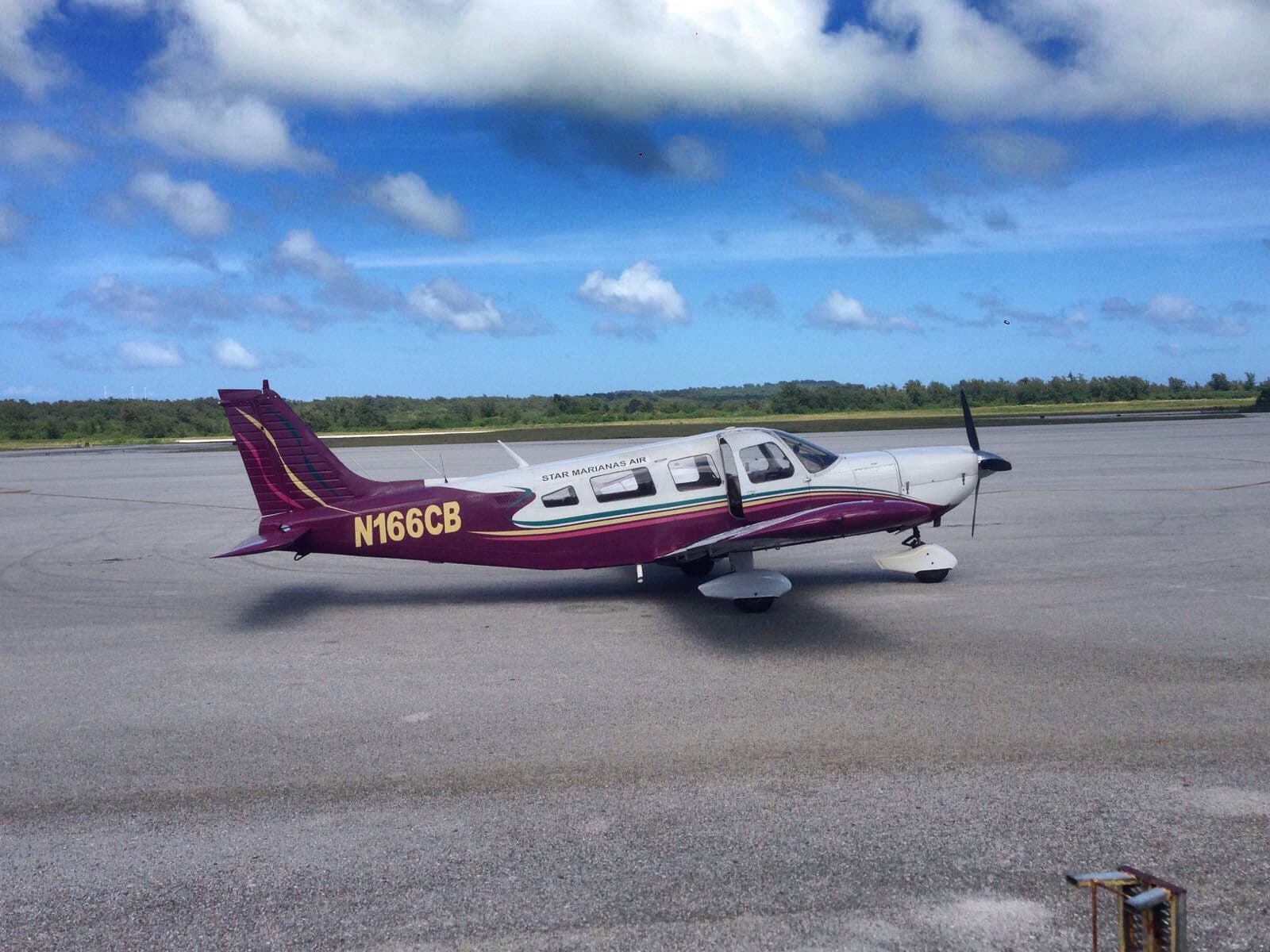
There are no scheduled passenger ferries between the islands at the time of writing; you fly. The trunk route, Guam–Saipan, is flown by a major US airline several times a day. The other links are operated by small local carriers — Star Marianas Air has been the mainstay for years — using light propeller aircraft that seat only a handful of passengers. Other small airlines have started and stopped services more than once. Treat every time and frequency below as approximate and check directly with the airline shortly before you travel.
| Route | Flight time | Aircraft and frequency | Good to know |
|---|---|---|---|
| Guam ↔ Saipan | About 45 min | Jet or turboprop, usually several flights a day | Fares can be high for the distance; book early |
| Saipan ↔ Tinian | About 10–15 min | Light aircraft, usually many short shuttles a day | Leaves from Saipan’s commuter terminal; day trips are easy |
| Saipan ↔ Rota | About 30 min | Light aircraft, limited flights | Few seats; confirm days of operation |
| Guam ↔ Rota | About 30 min | Light aircraft, limited or occasional | Not always operating — have a plan via Saipan |
| Tinian ↔ Rota / Guam | — | Charter only, as a rule | Route via Saipan |
Small-plane practicalities
- You and your bags will be weighed. Baggage allowances are small and excess may travel on a later flight. Pack a soft bag and leave big suitcases at your hotel.
- Bring your passport. Guam and the CNMI are separate jurisdictions for immigration and customs purposes, and you can expect document and customs checks when flying between them. Within the CNMI (Saipan, Tinian, Rota) carry photo identification.
- Weather moves the timetable. Light aircraft do not fly in strong winds or poor visibility. Never plan an inter-island flight for the same day as your long-haul departure.
- Book directly. The small carriers are often absent from the big booking sites; reserve on their own websites or by phone, and reconfirm.
Arriving by sea
Cruise ships call occasionally at Apra Harbor on Guam and at Saipan, mostly on repositioning or expedition voyages; there is no regular cruise season. Private yachts must clear in at an official port of entry on each side of the Guam–CNMI boundary. Expedition vessels are, in practice, the only way a visitor ever reaches the Northern Islands.
Getting around Guam
Car hire is the practical way to see Guam beyond the hotel strip. International and local companies have desks at the airport and in Tumon; you drive on the right under US rules, speed limits are low (mostly 35 mph, about 55 km/h, or less) and roads become very slippery in rain because of the coral aggregate in the surface. Visitors can generally drive on a valid home licence for a short stay — confirm with the rental company.
Without a car, visitor shuttle buses link Tumon’s hotels with the main malls and, on some routes, Hagåtña; taxis are metered and not cheap; and a local ride-hailing app operates. The government bus system exists but is infrequent and not designed for sightseeing. Organised island tours fill the gap for the south.
Getting around Saipan
Saipan is only about 23 km long, and one main road runs down each side of the island’s spine. There is no useful public bus network: visitors rely on hire cars, hotel and duty-free shuttles, taxis and tour vans. A car for two or three days is enough to see everything; rental desks are at the airport and in Garapan. Several of the best spots in the south and east are down rough coral tracks — check what your rental agreement allows.
Getting around Tinian and Rota
Neither island has public transport or a real taxi service. Reserve a hire car before you fly — there are few vehicles — or arrange for your accommodation to collect you and show you round. Fuel stations are few and keep short hours. Roads are quiet enough for cycling if you can cope with the heat. Details: Tinian and Rota.